Process development & system design / 6 videos
Designing the process for automation.
Process development and system design across chip fabrication, packaging, and assay equipment, bringing interdependent requirements together to enable automation.
Calviri / 2022-2024
This portfolio features publicly available demonstrations of my development work. Confidential company information and proprietary design details are excluded.
Automation is a system-wide design problem.
The goal was to enable automation across the peptide microarray workflow, from manufacturing the silicon chips to running chip-based assays. Each stage had to work with the next: a chip needed to be manufacturable, its packaging needed to support automated handling, and the packaged chip needed to move between equipment such as microplate washers and readers.
That made packaging a critical interface between fabrication and assay operation. Requirements from downstream equipment influenced packaging and chip design, while fabrication capabilities shaped what could be produced and assembled. Developing the process meant working across these domains together.
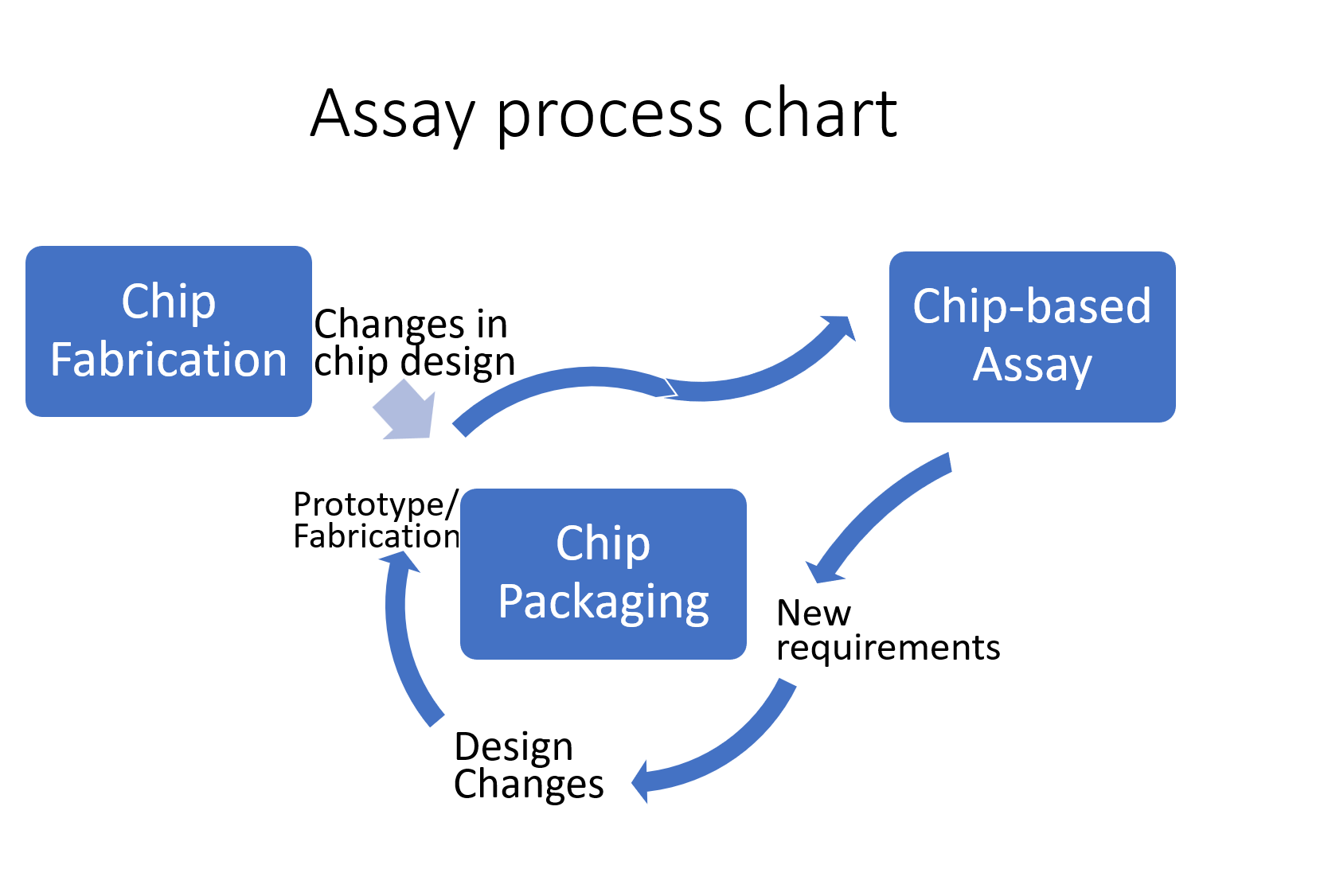
My contribution: connecting the requirements across the system
I worked across chip fabrication, packaging, and assay automation to translate requirements from different parts of the process into compatible designs. My contribution combined process development with mechanical, robotic, and manufacturing system design, considering how each subsystem would function within the complete workflow.
Requirements did not always align. A design decision that addressed one stage could create constraints elsewhere. The challenge was to reconcile those competing needs, revise designs, and iterate through prototyping with the wider process in view.
The hardware shown below grew out of that systems work: automated fabrication processes, robotic chip handling, and packaging that connects the chips to assay equipment. Individual mechanisms and machines served the larger objective of making the workflow compatible with automation.
Chip Fabrication
Automation begins with how the chip is made. Fabrication processes must support the chip design while accounting for downstream packaging and assay needs. The spray-coating demonstration shows one part of this manufacturing workflow.
Chip Packaging
Packaging connects the fabricated chip to the equipment that handles and processes it. It must protect the chip, support automated placement and transfer, and provide a compatible interface for downstream assay equipment. These demonstrations show robotic handling and packaging development within that wider process.
Pick and Place Robot
peptide micro array packaging for protecting and enabling assay automation
Peptide micro array chip packaging for protecting and enabling assay automation
Chip-Based Assay
The assay workflow brings the requirements together. Packaged chips need to work with equipment such as microplate washers and readers; those interfaces, in turn, inform packaging and fabrication decisions. These demonstrations show chips in a microplate format and a washing operation.